Why Android Auto Works Best as a Shared Road Community
 Analysis by Appyee
The most revealing thing about Android Auto is not the screen on the dashboard. It is the quiet network of habits built around that screen: drivers comparing head units, troubleshooting cables, requesting better apps, sharing workarounds, and deciding which parts of their phone deserve a place on the road. After spending time with it, I came away convinced that Android Auto is less a standalone app than a negotiated ecosystem. Google supplies the rules and the interface, developers fill in the useful gaps, and drivers collectively discover what works in the messy space between a phone, a car, and a moving vehicle.
That distinction matters. A navigation app can be judged by its maps, a music app by its catalog, and a remote-control app by whether it changes the channel. Android Auto is judged in public, in garages, parking lots, owner forums, app reviews, and support threads. Its real product is the relationship between a driver and a changing collection of phones, vehicles, cables, stereos, permissions, and apps. The community extends its usefulness, but it also exposes its limits.
A dashboard with a community behind it
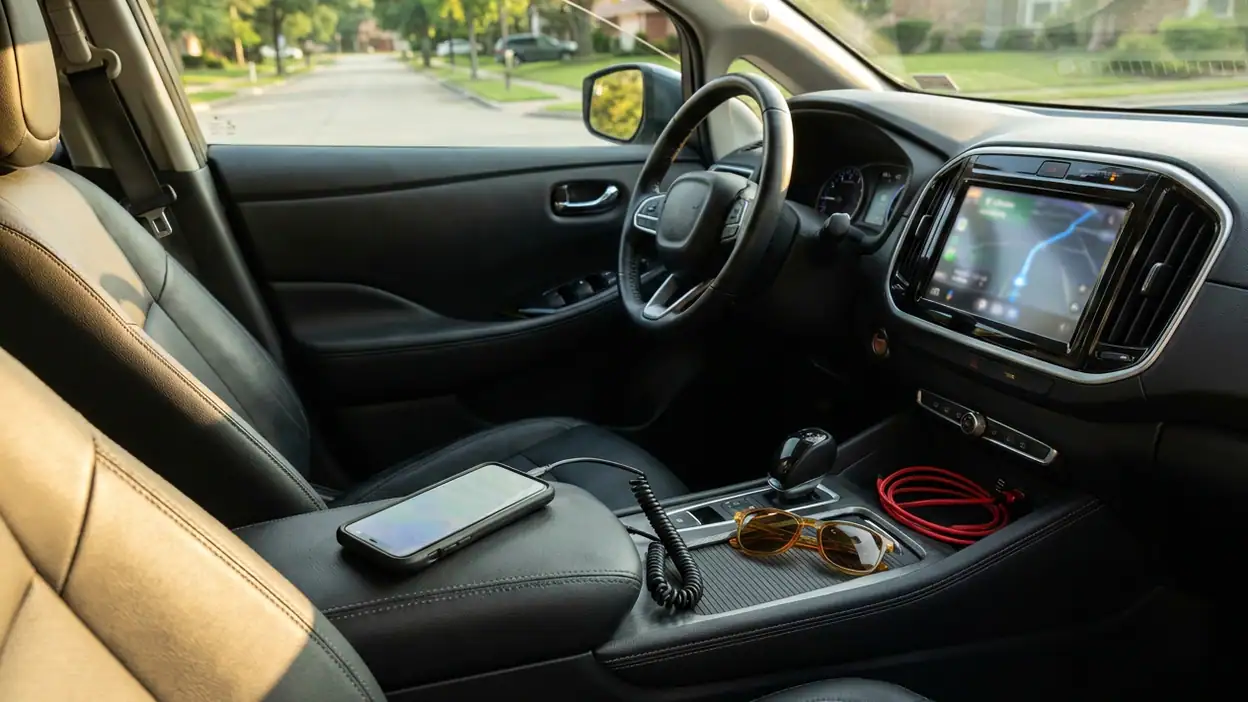
Android Auto begins as a practical promise: connect a compatible Android phone to a compatible car display and get a safer, simplified interface for navigation, calls, messages, audio, and selected voice actions. The first few drives can feel almost uneventful, which is a compliment. Google Maps or another supported navigation service sits within reach, music resumes without a hunt through a phone, and incoming messages can be handled with speech rather than thumbs.
Yet the calm surface hides a surprisingly active participant culture. People do not merely use Android Auto; they configure it, test it, compare it, and report its behavior. A driver with a new vehicle wants to know whether wireless connection is stable. Someone with an older stereo wants to know whether a firmware update will help. Another user wants to understand why an app visible on the phone does not appear in the car. These questions create a community around compatibility rather than fandom.
That is the central hook: Android Auto is a product whose social life begins at the point where the official promise meets individual hardware. The community is not gathered around a shared game world or a public feed. It is gathered around small moments of friction that can ruin a commute. The network value appears when another driver has already encountered the same failure and can explain it in plain language.
The participation model is mostly practical
Participation here is not symmetrical. Google owns the platform, controls certification, designs the interface, and decides which categories of apps can appear while driving. Car manufacturers and stereo makers control another layer of the experience, including display behavior, wireless support, steering-wheel integration, and firmware. App developers work within a narrower lane, adapting navigation, audio, messaging, charging, or vehicle-related features to Android Auto's driving rules.
Drivers occupy the largest and least formal role. They test combinations that no single company can easily reproduce: a particular phone on a particular Android version, connected to a particular vehicle after a cold start, with a particular cable and a particular battery setting. Their reports are often anecdotal, but they are also valuable field data. A recurring complaint about disconnections can reveal a pattern long before an official support page acknowledges one.
This makes the ecosystem cooperative without making it truly open. Users contribute observations, developers contribute integrations, and manufacturers contribute compatibility. Google remains the gatekeeper. The arrangement works because each group needs the others, but it also creates a clear ceiling on community influence. Drivers can request features and document bugs; they cannot decide which apps are approved or how the dashboard should behave.
The comparison with Google Maps is useful here. Maps can become better through reported road changes, reviews, traffic data, and local knowledge, but its core service still belongs to Google's data and infrastructure. Android Auto is even more dependent on coordination. Its value is not just information; it is reliable handoff between devices and surfaces. A community can identify a bad handoff, but only the platform owner or hardware maker can usually repair it.
How newcomers find the door
New users rarely enter through a community invitation. They enter through a car purchase, a phone upgrade, a rental vehicle, or a cable that suddenly stops working. The first question is usually simple: how do I get Android Auto running? The answer, however, can involve vehicle compatibility, phone settings, USB behavior, wireless pairing, permissions, and the difference between a phone that supports the service and a car that displays it.
That onboarding gap gives unofficial explanations a major role. Experienced users translate technical menus into practical steps: try a different cable, remove battery restrictions, update the phone, check the vehicle's projection setting, forget the old pairing, or test a wired connection before blaming wireless mode. Some advice is solid; some is outdated; some applies only to one manufacturer. Newcomers have to learn not just the steps but how to judge the source.
The official route is cleaner when it works. Android Auto's setup flow is not conceptually difficult, and compatible phones generally make the basic process understandable. The trouble is that compatibility is distributed across too many variables. A first-time user may interpret a car-specific limitation as an Android Auto failure, or assume an app is broken because it is not designed for use on a dashboard. Community guidance fills that explanatory gap, although it cannot guarantee a solution.
There is also a social threshold. Asking for help requires describing a setup precisely: phone model, Android version, vehicle, stereo, connection method, and symptoms. Users who provide those details tend to receive better answers. Those who say only that Android Auto is not working may encounter impatience. The ecosystem rewards technical literacy, which is useful but not especially welcoming.
Recurring rituals on the road
The community's rituals are repetitive in a reassuring way. A new Android release triggers compatibility checks. A vehicle firmware update prompts owners to compare results. Wireless adapters generate long discussions about latency, heat, connection speed, and whether the extra hardware is worth the money. New app versions lead drivers to ask whether a familiar button moved or a voice command changed.
Cable troubleshooting is its own ritual. Drivers swap cables, clean ports, disable aggressive battery management, and test whether the problem occurs only after the car has been parked overnight. These conversations can look mundane, but they reveal how much of the experience depends on physical details outside the app's visible interface. A service designed to make driving simpler can require a surprisingly elaborate maintenance culture.
There is a second ritual around app discovery. Drivers compare audio services, navigation alternatives, podcast players, charging tools, and vehicle utilities that support the car screen. The strongest recommendations usually include a use case rather than a rating: an app that handles long road trips well, one that resumes playback reliably, or one that makes voice search less frustrating. This is a healthier pattern than generic praise because the dashboard is a constrained environment. An app can be excellent on a phone and still be poor behind the wheel.
Duolingo is an instructive contrast. Its community rituals are visible in streaks, leagues, reminders, and shared progress. Android Auto has no comparable public scoreboard. Its rituals are maintenance rituals: connect, test, report, update, repeat. That makes the ecosystem less emotionally sticky, but it also keeps participation tied to genuine utility rather than performance.
What developers and drivers contribute
Developers contribute by accepting limits. A driving app cannot simply copy its phone interface onto the car display. It must reduce distraction, fit approved templates, and present actions that make sense while attention belongs on the road. The best integrations understand this constraint. They surface a short list of meaningful choices, keep text secondary, and make voice interaction feel like a natural extension rather than a fallback.
Creators also contribute through careful adaptation of familiar services. Audio apps decide how to organize libraries when browsing is limited. Navigation developers decide which controls deserve a prominent place. Messaging apps decide what can safely be read aloud and how replies should be confirmed. These are design contributions, even when users experience them as small buttons or voice prompts.
Drivers contribute a different kind of expertise. They identify patterns across trips, document connection failures, test beta versions, and distinguish a platform problem from a vehicle problem. Some produce detailed guides or videos; others leave a single useful review after finding a solution. The quality varies, and I would not treat community reports as verified technical evidence without checking them against official documentation. Still, this distributed testing is one of the ecosystem's strongest assets.
There is little evidence that Android Auto has a unified creator culture in the way a game might have streamers, modders, level designers, or fan artists. Its creators are scattered across car-tech channels, support communities, app teams, and enthusiast groups. That fragmentation is not necessarily a weakness. It reflects the product's real identity: a shared layer connecting several industries rather than a single destination with one audience.
Where social friction appears
The same practical focus that makes the community useful also creates friction. Compatibility discussions can become arguments between people with different vehicles, Android versions, or expectations. One driver reports flawless wireless performance; another reports constant drops. Both may be correct because the surrounding hardware is different.
Brand loyalty makes these debates sharper. Users sometimes defend a phone maker, car manufacturer, stereo brand, or competing navigation service as if a technical limitation were a personal choice. That can bury the most helpful information. A newcomer needs to know whether a fix is broadly reliable, merely anecdotal, or tied to one exact setup. Community confidence is not the same as evidence.
There is also frustration over disappearing features and changing interfaces. Drivers value stability more than novelty because they build muscle memory around a dashboard. A redesign that feels minor on a phone can be disruptive in a car, especially if it moves a control or changes how a voice action behaves. Users are often willing to accept change when it improves safety, but they are less forgiving when the reason is unclear.
The largest social fault line is the gap between expectations and safety. Some users want more apps, more browsing, more customization, and more control. The platform restricts those possibilities because driving is not the place for a full phone interface. That restraint can feel paternalistic, but the alternative would be a crowded dashboard competing with the road. The community's most responsible voices usually understand that a missing feature is not automatically a defect.
Moderation, safety, and what remains unclear
Android Auto's safety model is partly visible in its limited app categories and simplified templates. It is clearly not intended to mirror every phone function on the car display. Audio, navigation, communication, and selected vehicle-related tools receive priority because they can be structured around short interactions and voice control.
What is less visible is the full moderation process behind those boundaries. Users can see that some apps are supported and others are not, but they cannot always tell why an app was rejected, delayed, restricted, or removed. Developers may have clearer channels than ordinary drivers, yet the public explanation of individual decisions can be limited. That opacity protects consistency to a degree, but it also makes the ecosystem harder to understand.
Safety claims deserve careful wording. Android Auto is designed to reduce the need to handle a phone while driving; it cannot remove distraction from the car. Voice recognition can fail. Notifications can still interrupt. A driver can misuse a perfectly reasonable feature. Community guides sometimes focus so heavily on making a connection work that they underplay the need to configure the system before moving and keep interactions brief.
I also would not assume that every third-party adapter, unofficial modification, or workaround discussed by users has been validated by Google, a vehicle manufacturer, or an independent safety body. Community enthusiasm can make an accessory sound universal when it is only successful for a narrow combination of hardware. The responsible ecosystem marks that uncertainty clearly. The irresponsible one turns a single success into a promise.
Where the network value becomes real
The network value of Android Auto appears most clearly in edge cases. If everything works as advertised, a driver may never think about the community. The value arrives when a phone connects but the display stays blank, when audio plays through the wrong output, when a vehicle remembers an old device, or when an update changes behavior without explanation.
In those moments, another user's experience can save an hour. A good report narrows the problem: wired works but wireless does not; calls are fine but music is silent; the issue began after a system update; the failure happens only in one vehicle. That kind of detail turns a broad complaint into a testable hypothesis. It is modest network value, but it is real and often more useful than promotional material.
The network also helps people make purchasing decisions. Before buying a new head unit, wireless adapter, phone, or vehicle, users can compare reports from owners with similar setups. This is where Android Auto's ecosystem overlaps with the wider car-tech community. The product becomes part of a chain of decisions rather than a single download.
Competition sharpens this process. Drivers may compare Android Auto with a vehicle's native system or with Apple's alternative, but the practical question is usually not which platform wins in the abstract. It is which one behaves more reliably in a particular car with a particular phone. Universal TV Remote Control is a useful opposite example: its value is concentrated in one direct action. Android Auto's value depends on coordination, so community knowledge matters far more.
Sharing also has a quiet cultural effect. Drivers trade playlists, podcast recommendations, road-trip setups, and navigation preferences, but the exchange is usually framed around a journey. The car remains the social setting; Android Auto is the interface that makes shared routines easier. That gives the ecosystem a grounded quality. It is not a social network, yet it supports repeated social behavior around travel.
Can this ecosystem last?
Its durability depends less on constant excitement than on continued complexity. As long as Android phones, cars, aftermarket stereos, wireless standards, app policies, and software updates interact, people will need explanations. That gives the community a durable purpose. There will always be a new phone, a new vehicle, a new cable, or a new version to test.
But durability is not guaranteed. If Google makes the official experience more transparent and reliable, some support conversations may disappear because they are no longer needed. That would be a success, not a threat. A healthy community should not depend on preventable confusion. Conversely, if updates become unpredictable or compatibility becomes harder to explain, the ecosystem may grow larger while becoming more hostile to newcomers.
Developer participation is another condition. If app makers see Android Auto as a worthwhile surface, drivers get better audio, navigation, charging, and communication choices. If the design restrictions and approval process feel too narrow, developers may limit their investment. The platform needs enough structure to protect attention without making innovation feel pointless.
There is also a generational question. Younger drivers may expect the car display to behave like another smart screen, while safety-minded users may prefer a deliberately narrow interface. Android Auto will last if it can make restraint feel like good design rather than missing functionality. That requires clear explanations, dependable basics, and gradual improvement rather than a constant chase for more features.
My impression is that the ecosystem is durable because its participants are solving practical problems, not because they are emotionally attached to the brand. That is a strong foundation. Practical communities can survive disappointment if the tool remains useful, but they can also leave quickly when a competing system is more reliable in their vehicle.
The community verdict
Android Auto's community is not a polished club, and it is not meant to be. It is a loose field network made up of drivers, developers, hardware enthusiasts, support writers, and ordinary people trying to make a commute less irritating. Its rituals are repetitive, its advice can conflict, and its moderation boundaries are not always visible. Yet those imperfections reveal the product's real character.
The ecosystem adds the most value when it turns isolated failure into shared knowledge. It helps newcomers understand that a black screen may involve a cable, a setting, a vehicle mode, or an update rather than one mysterious app bug. It gives developers feedback from conditions that laboratory testing cannot fully reproduce. It gives buyers a way to judge compatibility before spending money. Those are meaningful contributions.
It cannot solve the platform's structural weaknesses. Google still controls the rules, car makers still introduce their own variables, and safety means that customization will remain limited. Community confidence should never replace official compatibility information or responsible driving judgment. The best guides acknowledge those limits instead of promising a universal fix.
My final view is favorable but measured: Android Auto is strongest not as a social product, but as a shared technical habit. Its community makes the service more intelligible, more adaptable, and occasionally more dependable than the official interface alone would suggest. If Google keeps the core experience stable, explains its boundaries better, and gives developers room to build useful driving tools, that community can keep doing what it does best: turning a complicated connection between phone and car into something ordinary enough to trust.


