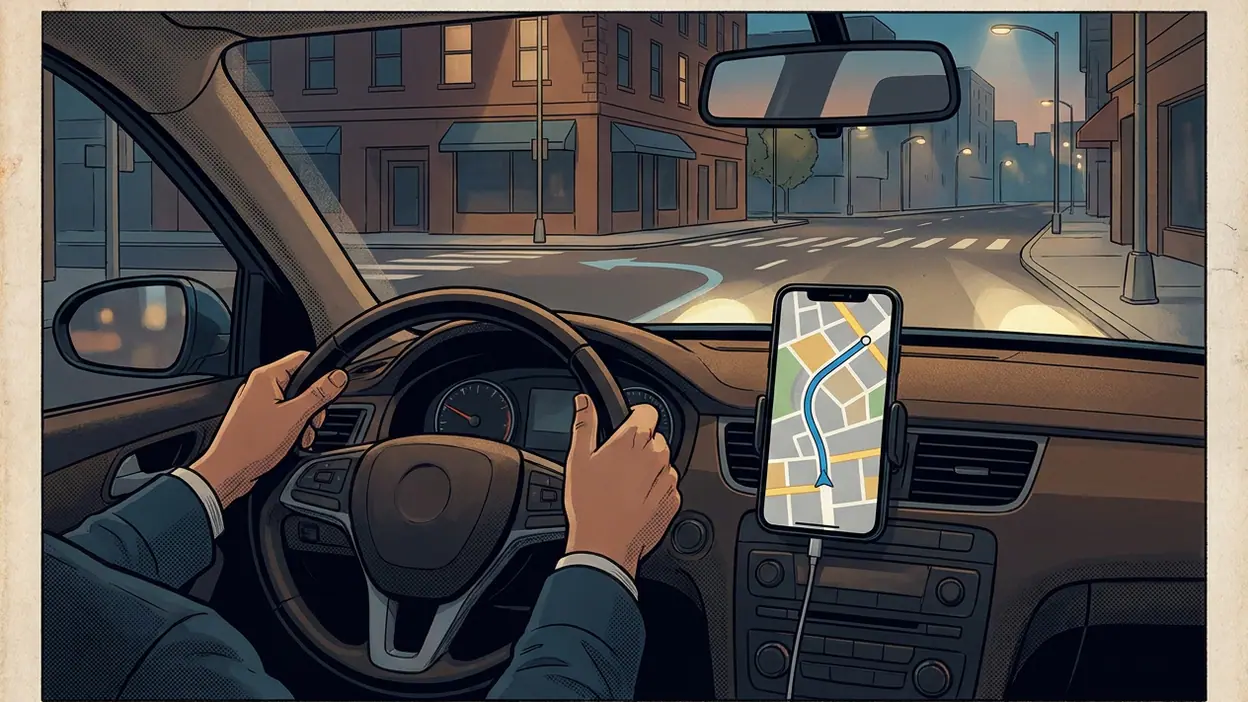
GPS Navigation Is More Than a Route: Who Shapes the Daily Drive
 Analysis by Appyee
A navigation app does more than tell you where to turn. It gets a place on your home screen, permission to track movement, and a chance to shape how you understand the roads around you. GPS Navigation: Road Map Route makes that bargain easy to examine: its core promise is straightforward, but the value of any route planner depends on the wider system behind it, from map data and phone permissions to the habits people form before they start the engine.
That is the larger point here. GPS navigation looks like a utility, yet it sits at a strategic intersection of software, location data, and daily behavior. The app can be useful without owning the entire ecosystem, but its reach and reliability are determined by forces larger than a blue line on a map. Looking at it through that lens explains both why navigation apps feel indispensable and why users should pay attention to what they cannot see.
The power behind the route
The app’s name does not, by itself, identify a major technology company or establish who supplies its maps, traffic information, or routing engine. That distinction matters. A familiar-looking navigation interface is not proof that it controls a global mapping network, and a review should not invent corporate ownership or infrastructure that the product does not clearly disclose. In mobile software, the visible app and the underlying platform are often different things.
That uncertainty is part of the strategic story. A navigation product may assemble services from outside providers, rely on device-level location features, or operate within the distribution rules of Apple’s App Store and Google Play. Each dependency can shape what the app can do and how it reaches drivers. Users experience one product; behind it may be several layers of companies, permissions, and technical services.
For the person choosing a route, this arrangement can be invisible until something goes wrong. Map coverage, address search, traffic updates, and turn timing all depend on data and software working together. A polished screen cannot compensate for stale road information. The practical test is not whether an app says it offers GPS navigation, but whether it gives dependable guidance for the trips its audience actually makes.
A utility inside a larger ecosystem
Navigation is unusually well placed within the phone ecosystem because it combines a recurring need with a strong reason to share location. A driver opens the app with a destination in mind, then expects it to remain attentive while the trip unfolds. That creates a valuable service relationship: the app is not merely displaying content but interpreting a user’s movement in context.
Phones make this possible through location permissions, sensors, connectivity, and operating-system services. Those pieces can help a route planner respond to movement and keep guidance available while another app is in the foreground. They also make navigation dependent on the platform. Battery management, background access, notification controls, and privacy settings can all affect what the app is able to do.
This is where ecosystem power becomes more than a corporate slogan. A platform owner can influence which apps people discover, what permissions they can request, how they are billed, and which system features they can use. An independent navigation app can still earn a place in someone’s routine, but it competes on ground shaped by the phone maker and app-store operator.
Distribution is part of the product
Getting an app installed is the first part of winning a navigation habit. App-store search, recommendation surfaces, ratings, device compatibility, and clear permission prompts all influence whether a driver tries it. The companies controlling those storefronts have distribution leverage before a route is planned. They can set rules for visibility and security without ever drawing a road themselves.
There is a second distribution channel: the phone’s defaults. If a user taps an address in a message or calendar entry, the operating system may direct that action to a preferred map app. That small convenience can outweigh a competitor’s features. A challenger then has to persuade people not only that its routing works, but that opening it is worth the extra step.
Convenience is a form of distribution. It does not require a dramatic lock-in mechanism. A saved destination, a familiar start button, and a route that appears quickly can be enough to keep an app in rotation. Conversely, confusing setup or a permission request that arrives before the user understands the benefit can end the relationship before the first journey.
The habit is built in small decisions
Navigation becomes sticky through repetition. The user enters a destination, checks the suggested route, follows directions, and returns the next time an unfamiliar address appears. If that loop stays predictable, the app becomes the reflex rather than a deliberate choice. The strongest habit-forming decision is often not a flashy feature; it is reducing the effort between “Where is this?” and “I’m on my way.”
There is a trade-off in that smoothness. Location access is central to real-time guidance, but users should be able to understand when the app needs it and why. A request that feels proportionate to an active trip is easier to trust than a vague demand for continuous access. Good mobile design explains the exchange instead of hiding it behind a setup screen.
Navigation also influences behavior beyond the app. A driver may leave earlier because a trip looks difficult, avoid a road that has become familiar but slow, or trust a suggested route over local instinct. The app’s recommendations can become part of how someone plans a day. That influence deserves more scrutiny than the modest appearance of a route line suggests.
What the phone changes
On a phone, navigation has to work while attention is divided. The driver may be watching the road, listening for a turn, and glancing at a screen only briefly. Clear instructions and stable guidance matter more than decorative detail. Any app in this category should be judged by how calmly it supports the real task, not by how busy its map looks when examined at home.
That standard also exposes a limit. A phone is a small, battery-powered device operating in a moving vehicle, often with changing signal conditions and interruptions from calls or notifications. The operating system can help, but it also mediates access to audio, location, and background operation. A route planner is therefore part of a chain of reliability, not a self-contained answer to every travel problem.
For GPS Navigation: Road Map Route, the practical question is whether its guidance and map presentation earn trust across ordinary trips. The app’s general navigation purpose is clear, but claims about a particular map provider, live traffic system, offline coverage, or distinctive routing capability should be verified in the product itself. Those details are what separate a useful alternative from a dependable daily driver.
Rivals reveal different priorities
Other travel apps show how much the interface follows the mode of transport. Trenitalia centers on rail journeys and the services of a specific national operator. Transit - Subway & Bus Times focuses on public transport schedules and city movement. DiDi Rider: Affordable rides connects people to a ride service rather than asking them to drive. They overlap with navigation only at the broad level of helping someone get somewhere.
That contrast is useful because it keeps expectations honest. A car-focused route planner should not be judged as a transit timetable, and a transit app’s social or schedule features do not automatically make it a stronger road navigator. MapXplorer: Navigation, Radar is a closer comparison by name and category, but the meaningful contest still comes down to the quality of directions, coverage, clarity, and the user’s confidence in the data.
These alternatives also show how companies compete for a journey at different moments. One may help choose a train, another may arrange a ride, and a navigation app may guide the person already behind the wheel. The mobile ecosystem does not need one winner for every trip. It does, however, reward whichever service is easiest to summon at the point of decision.
Where users gain, and where they give ground
Users benefit when navigation makes unfamiliar places less stressful, reduces the work of planning, and leaves more attention for driving. Choice matters too: a dedicated app can give people another option if their default map service does not suit their needs. Competition can push products to improve their directions, interfaces, and privacy controls.
But users lose leverage when a service becomes difficult to replace because it holds saved places, learned preferences, or a familiar routine. They may also have little visibility into the sources behind map updates or how location information is handled. The issue is not that every navigation app misuses data; it is that location is unusually revealing, and the burden falls on users to evaluate permissions and policies they may never want to read during a busy day.
Practical habits help restore some control. Review location access in the phone’s settings, grant only the level of access needed for the app’s actual features, and compare a suggested route with signs and local conditions. Keep an alternative available for important journeys. No digital direction should overrule a closed road, a safety concern, or clear evidence that the map is wrong.
The verdict on platform power
GPS Navigation: Road Map Route is best understood as both a practical tool and a window into mobile power. Its appeal rests on a familiar promise: enter a destination and get guidance. Yet the deeper value of that promise depends on distribution, operating-system access, dependable mapping data, and a relationship with location that users can understand and control.
That makes it a worthwhile option to assess on its actual performance, not on assumptions suggested by its name or category. If its directions are accurate for your routes and its permission choices feel reasonable, it can earn a useful place on your phone. If the app leaves basic questions about coverage, data, or reliability unanswered, treat it as a secondary planner until it proves itself. Navigation is everyday software, but it is never just a route: it is a small, recurring negotiation over convenience, trust, and who gets to shape the way we move.


