Pokémon GO: Still the Standard for Location-Based Adventure
 Analysis by Appyee
Pokémon GO is no longer merely a game about catching creatures in the street. It is a test of whether a mobile adventure can make the real world feel worth exploring, even after the novelty of seeing a Pokémon appear beside a café has worn off. That distinction matters because the category it helped create is now judged by tougher standards: not just whether a game gets people outside, but whether it gives them a reason to go somewhere, something worthwhile to do when they arrive, and a satisfying reason to return.
After spending time with it again, my view is straightforward. Pokémon GO remains the clearest expression of location-based adventure, but it is also a revealingly uneven one. Its strongest ideas are still remarkably fresh. Its weaker systems show how far the genre has to go before walking, collecting, social play, and live service design feel like parts of one coherent journey rather than layers added over time.
The category has moved from novelty to purpose
The first generation of location-based games could rely on one spectacular trick: placing digital objects in physical space. That was enough to make a familiar walk feel strange. A park became a hunting ground, a landmark became a destination, and the phone stopped being only a screen to look at. Today, that trick is no longer sufficient. Players have seen augmented reality, map-based exploration, timed events, seasonal rewards, and location-specific collections. The surprise has become a baseline.
The new question is more demanding: does the game make movement feel intentional? A good location-based adventure should turn distance into progress without making the player feel punished for living in the wrong neighborhood. It should reward curiosity, but not require constant staring at a screen. It should create reasons to play alone, while making nearby players feel like an advantage rather than a requirement. Most importantly, it needs a rhythm that survives ordinary life. A game cannot assume every session happens during a festival, a commute, or a perfectly sunny afternoon.
That is where Pokémon GO remains important. It understands that the physical world is not a backdrop. It is the game board, the source of friction, and the reason the experience can feel personal. The same walk can produce different encounters, different weather, different tasks, and different social possibilities. The category is advancing, but it still borrows its central grammar from this game.
The baseline players now expect
Players entering a mobile adventure game now expect a generous free starting experience, clear short-term goals, long-term collection, regular events, and enough variety to make a familiar route feel changeable. They expect progress to survive between sessions. They expect the game to understand that a five-minute stop, a twenty-minute walk, and a weekend outing are different kinds of play. They also expect a live game to communicate its rules clearly, because an endless stream of bonuses is not the same thing as meaningful content.
Pokémon GO meets much of this baseline through a layered loop. A nearby creature creates the immediate hook. Catching it feeds the collection. Catching more creatures supplies resources, research progress, evolution goals, and battle options. Stops and gyms turn movement into a sequence of small decisions. Raids, team play, and limited-time events expand the session from personal scavenging into shared activity. The loop is easy to understand, but it has enough branches to support both casual play and obsessive planning.
The rhythm is particularly effective because it can be interrupted without collapsing. I can open the game for a few minutes, catch what is nearby, and leave with a small gain. I can also plan a longer route around raids, community events, or a specific type of encounter. That flexibility is now a category expectation, and many mobile games still struggle to provide it. They either demand a long session or reduce short sessions to empty check-ins.
Its strongest signal is that place still matters
The most important thing Pokémon GO communicates is not that a phone can recognize a location. It is that location can shape meaning. A creature found near a river, a busy shopping street, a quiet residential path, or a crowded public event becomes part of a memory tied to that place. The game does not simply decorate a map; it encourages players to notice the map.
That effect is easy to underestimate because it becomes ordinary. A player learns which park has useful spawns, which station has reliable items, and which square attracts enough people for a raid. These are not just efficient routes. They are informal local knowledge, shared through conversation and community groups. The game creates a second layer over the city, but the layer works because it remains connected to physical habits.
This is Pokémon GO's strongest signal for the wider category: the best digital rewards should make the real world more legible, not less. A location-based game should give players a reason to look up, change direction, explore a side street, or meet someone at a familiar landmark. If the map is interchangeable, the central promise has already weakened.
The conventions it follows
Pokémon GO follows the classic collection-game structure with impressive discipline. There is always another creature to find, another evolution to complete, another move set to improve, and another gap in the collection to fill. The appeal is partly completionist, but it is also emotional. A rare encounter feels valuable because the player has built a history with the collection, not because every creature is mechanically complex.
It also follows the live-service convention of rotating content. Events create urgency, weather and seasonal changes alter the texture of play, and special appearances give familiar locations a temporary purpose. This keeps the world from becoming completely solved. Even a player who knows every nearby stop can be tempted by a new event or a limited encounter.
The game follows another familiar convention: progression is spread across several currencies and systems. Items, candy, stardust, research rewards, battle resources, and event bonuses all contribute to the feeling of accumulation. This creates plenty of goals, but it also produces friction. New players can understand catching quickly; understanding which resources deserve protection takes longer. The system rewards attention, yet sometimes mistakes complexity for depth.
Compared with Roblox, which gives users an enormous range of player-made worlds, Pokémon GO is far more controlled. That control protects its identity and makes the world recognizable, but it limits the kinds of adventures players can discover. Super Bear Adventure offers a more traditional platforming structure, with direct movement and authored spaces that can be mastered. Pokémon GO chooses a slower, more open-ended form of progression, where the route itself supplies much of the content.
The convention it challenges
Most mobile games treat movement as something that happens between meaningful actions. Pokémon GO reverses that priority. Walking is not a loading screen or a way to refill energy; it is one of the main verbs. Distance can hatch an egg, unlock progress, generate encounters, and lead the player toward a social activity. The game challenges the assumption that mobile play must happen in one fixed place.
That challenge has consequences. The best sessions feel physically grounded. I remember a route because of the creatures and people encountered along it, not because I completed an abstract level. The game can make a routine errand feel like a small expedition. It can also make a familiar neighborhood feel temporarily unfinished, as if there is always one more reason to take the longer way home.
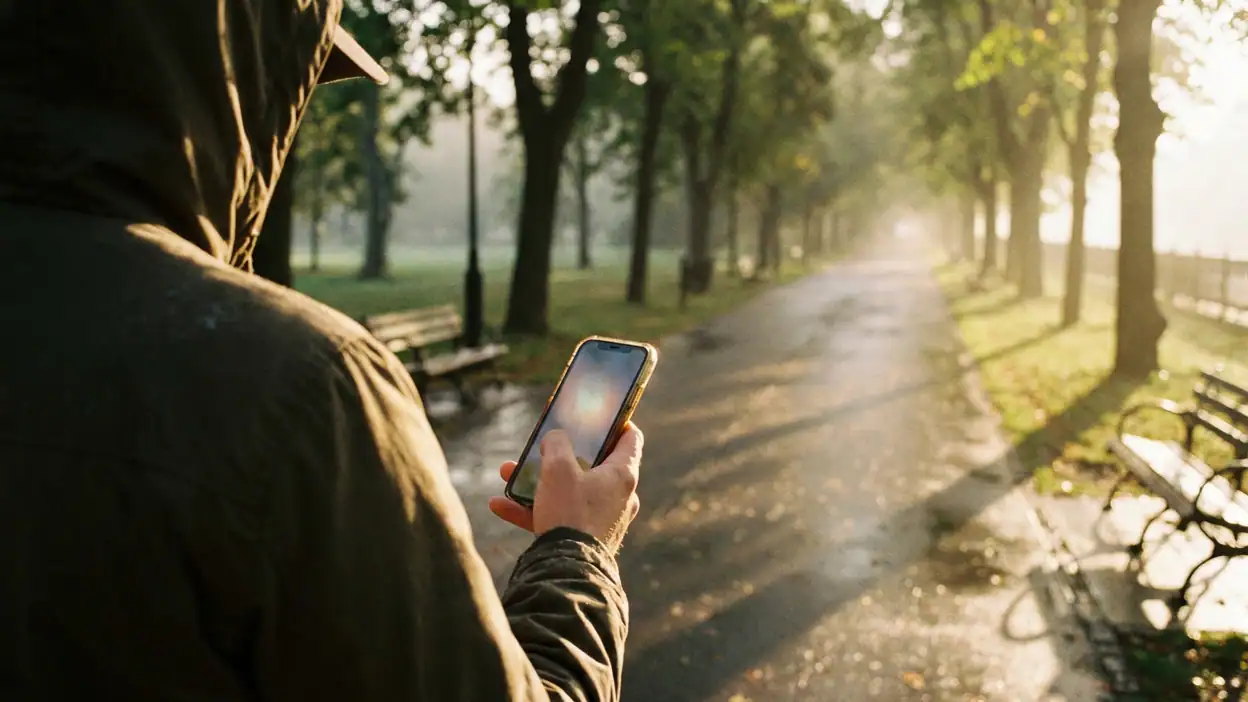
But the challenge is not complete. The game still relies heavily on tapping, menus, inventory management, and repeated capture actions. In practice, many players walk through the world while looking down at a phone. The physical setting supplies the meaning, but the interface often competes with it. Pokémon GO questions the stationary mobile game without fully escaping the habits of stationary mobile design.
What related games reveal
The contrast with other mobile games makes the category's direction clearer. Roblox demonstrates the power of variety and social authorship. Its players can move between radically different experiences, which makes discovery feel endless, but the quality and clarity of those experiences vary sharply. Pokémon GO has the opposite problem: its identity is strong and its world is coherent, yet its activities can feel repetitive when the live schedule is not providing a fresh reason to explore.
Super Bear Adventure shows why direct control still matters. A carefully designed platforming space gives every jump a readable challenge and every successful movement a clear sense of mastery. Pokémon GO is not trying to compete with that kind of precision, but the comparison exposes a weakness in location-based adventure: movement can be meaningful without being mechanically rich. Walking toward a destination is not the same as mastering a route.
Dragon Mania Legends highlights another useful contrast. Its island-building structure makes progress visible and organized. Players can see their collection grow into a place, and the management layer gives returning sessions a dependable shape. Pokémon GO has a larger emotional world, but much of its progress remains scattered across menus, storage, medals, and collection screens. The adventure is memorable; the record of that adventure is less elegantly arranged.
Sonic Forces: PvP Battle Race points toward the value of immediate competition. Its races are short, legible, and designed around direct comparison. Pokémon GO has battles and competitive leagues, but its central appeal is not the clean thrill of a head-to-head match. It is better at creating shared presence than at delivering instant competitive clarity. That distinction matters as the category tries to serve players who want both exploration and decisive gameplay.
Even FPS Strike Ops: Modern Arena, despite belonging to a completely different action tradition, reinforces the same lesson. Players increasingly expect responsive controls, clear feedback, and a sense that their decisions matter immediately. Location-based games cannot copy a shooter, but they can learn from its communication. Pokémon GO sometimes makes the player work too hard to understand why a reward appeared, why a battle was lost, or which upgrade will genuinely improve the next session.
The emerging standard is meaningful participation
The next standard for adventure games on mobile is not simply more content. It is meaningful participation at different levels of commitment. A player should be able to contribute with a short walk, a planned expedition, a social gathering, or a long-term collection goal, and each form of participation should feel legitimate rather than like a lesser version of the game.
Pokémon GO is already close to this standard. Its strongest events create a shared appointment without making every player identical. One person may hunt rare creatures, another may focus on raids, another may trade, and another may simply enjoy the walk. The same public space supports different ambitions. That is a powerful design achievement because it turns a game into a social layer without requiring everyone to play in the same way.
The category is also moving toward better context. A location should not only determine what appears; it should explain why the activity belongs there. A waterfront, museum district, trail, or neighborhood square can support different moods and different forms of discovery. Pokémon GO sometimes achieves this through landmarks and local activity, but it could push further. The future belongs to games that treat places as authored environments with character, not merely coordinates with spawn tables.
Another emerging expectation is respectful attention management. A game built around walking should not demand continuous visual concentration. Better audio cues, clearer haptic feedback, safer interaction patterns, and more reliable background progress would let players participate without turning every outing into a screen-management exercise. Pokémon GO has made progress in this direction, but the category still treats convenience as a secondary feature when it should be central to the design.
Where the category still lags
The biggest weakness across location-based adventure is accessibility. Population density, weather, mobility, safety, local infrastructure, and social confidence all affect the experience. A player in a busy city may have abundant stops, raids, and nearby players. Someone in a rural area may face long distances, fewer encounters, and a much thinner social layer. No clever event schedule can erase that difference completely.
There is also a persistent tension between exploration and optimization. Once players learn the most efficient routes, the world can shrink. The player stops wondering what might be found and starts checking whether the expected reward justifies the detour. This is not unique to Pokémon GO; it is a problem for any game that turns a living place into a resource map. The more transparent the systems become, the easier it is to reduce discovery to a calculation.
Social design remains uneven as well. Raids and group events can create genuine connection, but they can also leave solo players outside the most valuable content. The category often treats community as a bonus rather than a design responsibility. A strong social game should make meeting others rewarding without making solitude feel like a penalty.
Finally, live-service fatigue is real. Constant events can keep a game active, but they can also make the calendar feel like an obligation. Players should not need to track every weekend, bonus window, ticket, and limited encounter to feel that they are keeping up. Pokémon GO's longevity is impressive, yet longevity becomes less meaningful if returning players feel anxious about everything they missed.
What this means for players
For users, the consequence is that Pokémon GO is best understood as a companion to ordinary movement rather than a replacement for a traditional adventure game. It is excellent at giving a walk a pulse. It is less consistent at delivering a carefully authored campaign, a deep combat system, or a perfectly balanced competitive experience. The game earns its place on a phone through accumulation: small discoveries, remembered places, familiar routes, and occasional moments when the whole local community seems to be playing together.
That makes the game unusually personal. Two players can install the same app and experience different versions of it because their neighborhoods, schedules, friends, and habits shape the content. The city becomes part of the save file. This is a stronger form of personalization than simply choosing an avatar or adjusting a difficulty setting.
It also means the game asks for a different kind of patience. Progress is often gradual, and the most satisfying rewards may be tied to a route repeated over weeks rather than a level completed in minutes. Players who want immediate mechanical intensity may find the loop too soft. Players who enjoy collecting, walking, and watching a familiar place change over time can find it remarkably sticky.
The practical advice is to resist treating every event as mandatory. The game becomes healthier when played as a flexible layer over real life. Choose a route, pursue a small goal, join a group when it feels worthwhile, and let the rest remain optional. That approach reveals the game's best quality: it can add texture to a day without needing to consume the day.
The category's outlook
Location-based adventure is not finished, but it is past the point where novelty can carry it. Future games will need stronger reasons for places to matter, more expressive movement, better support for different levels of commitment, and social systems that include rather than pressure. They will also need to respect attention. The winning design will not be the one that keeps players staring at a map for the longest time; it will be the one that makes the world around the player feel more inviting.
Pokémon GO remains the category's reference point because it solved the hardest problem first: it made walking feel like play at a global scale. Its limitations are just as instructive. A map full of icons is not automatically an adventure. A live event is not automatically a reason to return. A collection is not automatically a meaningful journey. The systems have to connect, and the physical world has to remain more than a convenient container.
That is why the game's legacy is larger than its current feature list. Roblox shows how far player-made variety can stretch. Super Bear Adventure shows the value of authored movement. Dragon Mania Legends shows how clearly progression can be staged. Sonic Forces: PvP Battle Race shows the appeal of immediate competition. Pokémon GO brings a different lesson: the strongest mobile adventures can change how players inhabit familiar places.
Pokémon GO still deserves its central position, but not because it has perfected location-based play. It deserves it because every serious successor is still answering questions it forced the industry to ask. Where should a game happen? What makes a walk meaningful? How can strangers share a world without sharing the same goals? The next era will belong to games that answer those questions with more depth, fairness, and imagination. Until then, Pokémon GO remains both the genre's most convincing adventure and its clearest unfinished argument.


