Pou Makes a Case for the Small, Repeatable Break
 Analysis by Appyee
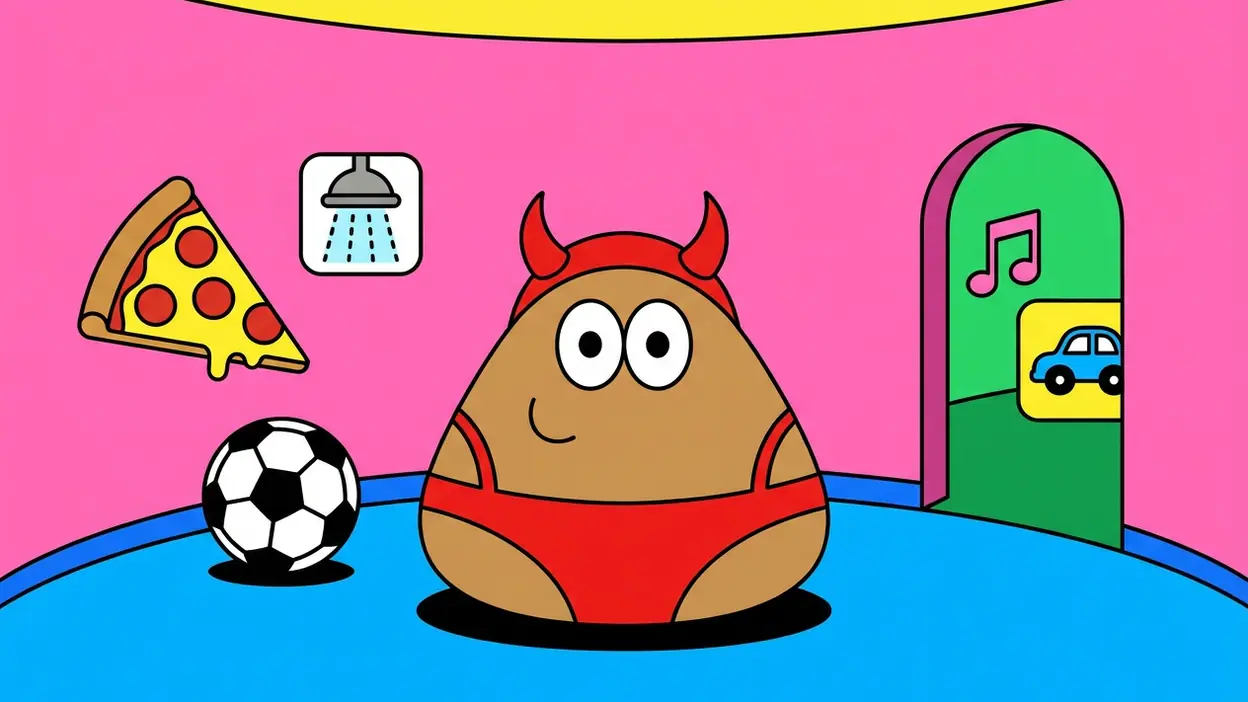
The odd thing about Pou is how quickly a few spare minutes can start to feel like a visit. You feed the little brown creature, wipe away the mess, pick an outfit, then squeeze in a quick game before putting your phone down. It is not a new productivity tool, and it will not make a crowded day easier in any measurable way. But as mobile habits tilt toward short, repeatable breaks, this old-fashioned virtual pet makes a persuasive case for a different kind of utility: a small, low-pressure routine that asks for attention without demanding a whole evening.
That is the reason to look at Pou again. Its usefulness is emotional and practical in the narrowest sense: it gives idle moments a simple shape. You do not need to learn a complicated system, coordinate with friends, or remember a long plot. The game presents one creature, a handful of needs, and a steady invitation to check back. That directness can feel surprisingly timely in a phone full of work alerts, video calls, navigation prompts, and games built to keep you chasing the next milestone.
A tiny routine for the gaps in a busy day
The behavior shift behind the renewed fit is easy to recognize. Many people now use phones in fragments: a minute while waiting for a ride, a short pause between messages, a few moments after a meeting ends. Those pockets are too small for a long match or a story-heavy game, yet scrolling through an endless feed can leave a break feeling less restful than it should. Pou occupies that gap with tasks you can understand at a glance and finish on your own terms.
The care loop is the game’s core rhythm. Pou gets hungry, dirty, tired, or unwell, and each condition points toward an uncomplicated response. Feed it, clean it, let it rest, or use the appropriate care item. The cycle is easy to grasp, and the visible change in the pet gives each action a little payoff. There is a mild pull to return later, but the game does not require a carefully timed session or a long chain of decisions. A check-in can be brief and still feel complete.
That makes the game timely less because it has been redesigned for a new era than because current phone habits happen to suit its original idea. Pou does not need to compete with a video call on Zoom Workplace or a route on Android Auto. Those tools solve urgent, specific problems. Pou fills the leftover space around them, when a person wants interaction but not another obligation. Google Play services may keep many Android experiences running behind the scenes, but this is a game with a much more visible job: give a few minutes a friendly focal point.
The first useful moment arrives almost immediately. A new or returning player can see what Pou needs, tap the relevant room or item, and act without consulting a guide. Cleaning is particularly satisfying because the change is obvious; food and care actions also produce simple, readable feedback. After that, dressing the pet provides a more personal layer. The routine is not deep, but it is legible, and legibility matters when a game is being opened between other tasks rather than settled into for an hour.
Then there are the mini-games. They turn the care visit into a small loop of its own: play for a little while, earn currency, and spend it on food, clothing, or other items for Pou. The games vary in feel, so the visit can be more than tapping through a checklist. They are simple diversions rather than headline attractions, but that scale suits the rest of the design. Compared with the precise, score-driven timing of Magic Tiles 3, Pou’s mini-games feel less like a test of reflexes and more like optional entertainment tucked into a pet’s day.
The people most likely to adopt or rediscover it are not necessarily committed casual-game fans. It makes sense for younger players who enjoy caring for a character, for anyone who grew up with virtual pets and wants a familiar loop, and for adults who want a lightweight game that does not demand social coordination. It can also appeal to players who find large progression systems tiring. There is no sprawling map to master or team to keep waiting; the main relationship is between the player and one expressive, slightly needy creature.
Its advantage over older virtual-pet routines is not that it has removed their simplicity, but that it gathers the basics into a tidy mobile package. The rooms and activities are easy to reach, the pet’s condition is clear, and customization gives repeated check-ins a personal touch. You can adjust how Pou looks and make the space feel more like your own, then move between care and play without a lengthy setup. That is a more convenient proposition than a toy that can only be used in one place, while keeping the same small pleasure of tending to something that responds.
Still, the ease has a limit. The activities can become repetitive, and the need-care-return pattern may feel more like maintenance than play once its novelty fades. Mini-games add variety, but they do not transform the game into a deep arcade collection. Some players will also find the pet’s recurring needs more nagging than comforting, especially if they dislike games that frame a return visit as care. And while customization helps, the basic visual and mechanical vocabulary remains familiar. Pou is not hiding a sophisticated simulation beneath its simple exterior.
There is also a difference between a gentle routine and a meaningful bond. The game gives the impression of looking after a living companion, but its responses are bounded by a compact set of needs and actions. That limitation is part of its accessibility, yet it can make affection feel transactional: notice a problem, fix it, collect a reward, leave. Players who want richer character writing or more surprising interaction may quickly outgrow the loop. The game works best when treated as a small ritual, not as a substitute for a more expansive world.
What Pou says about mobile life is that not every useful phone experience has to save time, deliver information, or connect a group. Sometimes the appeal is a predictable interaction that gives the mind a break from making decisions. A virtual pet is an especially clear version of that bargain: it asks for a little care and offers a small, visible response. In an era of feeds that can stretch a pause indefinitely, a task with a beginning and an end can feel like a relief. The appeal lies in the boundary as much as in the pet.
How long that relevance lasts depends on what a player wants from a break. The broad habit of using phones in short intervals is unlikely to disappear, so the format still has room. But the game’s freshness will not last equally for everyone. Players who enjoy repetition, collection, and gentle caretaking may keep returning; those who need novelty, challenge, or a strong narrative will probably move on. Pou’s lasting value is not that it endlessly reinvents itself. It is that it makes returning easy, and leaving easy too.
My recommendation is straightforward: give Pou a try if you want a compact, friendly game for the in-between moments and enjoy the satisfaction of tending to a familiar little character. Do not expect a demanding challenge or a deep simulation, and do not confuse its routine with a new essential phone tool. Its strength is smaller and more believable: a pocket-sized ritual with a clear stopping point. In a crowded mobile life, that modest promise still earns its place.


