Shazam Turns Passing Songs into Lasting Discoveries
 Analysis by Appyee
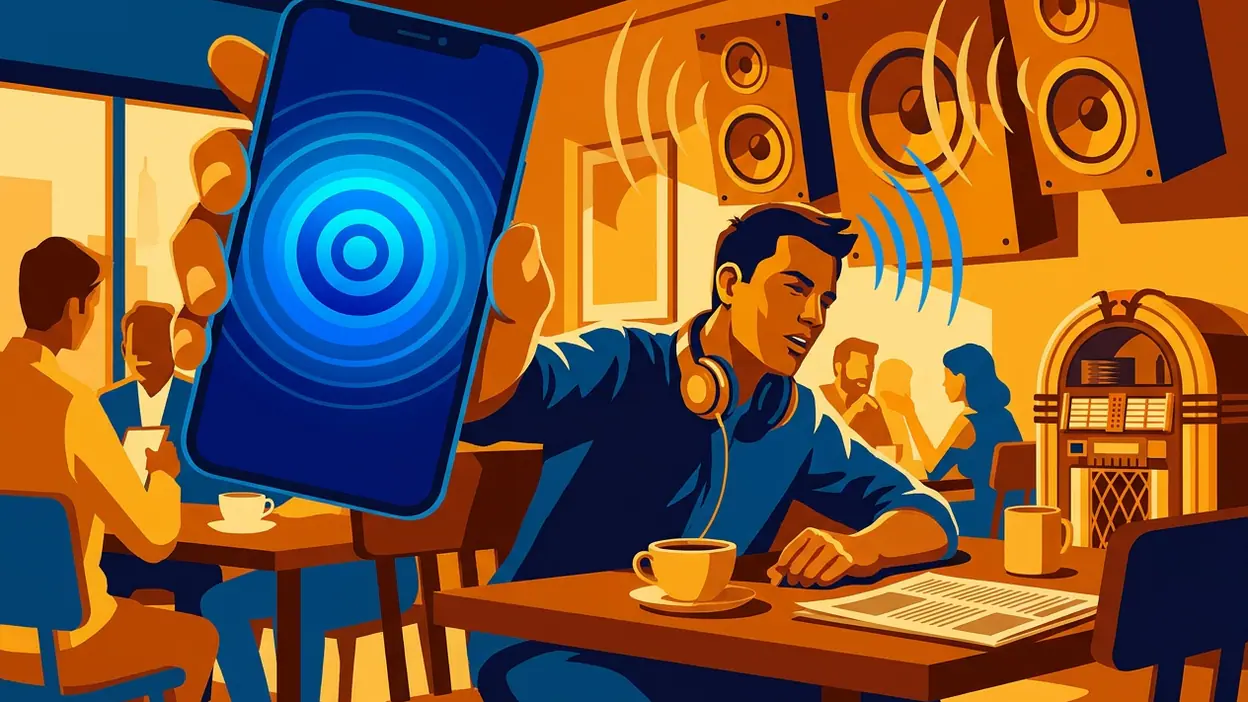
The song you want to identify is usually playing at the least convenient moment: under café chatter, between scenes in a show, or just as a friend reaches for the door. Shazam: Find Music & Concerts earns our App of the Week pick because it turns that fleeting question into a reliable answer, then gives the answer somewhere useful to go. It is a small app with a surprisingly good sense of what music discovery should feel like: quick, low-friction, and open to whatever catches your ear.
That sounds simple because the best version of the idea is simple. Tap to listen, wait a beat, and Shazam tries to name the track. But the app’s value is not only in recognizing a chorus. It is in making those little discoveries stick around, so a song heard in passing can become part of a playlist, a memory, or a plan to see the artist live. Shazam deserves the week’s recommendation not because it has reinvented music, but because it handles this one everyday problem with uncommon clarity.
Why Shazam won the week
Plenty of apps can fill a screen with music. Shazam is more useful at a different moment: when you hear something and need to know what it is before the sound disappears. That distinction gives the app a defined job instead of an endless feed to maintain. It does not need you to describe your taste, build a profile, or remember a lyric. It starts with the sound in front of you.
Recognition is the hook, but the history of identified tracks is what makes the habit worthwhile. A song found in a restaurant can be revisited later rather than lost in the blur of the day. Repeated discoveries gradually create a personal record of what has caught your attention, including music you would never have searched for on your own. That gives Shazam a quiet kind of stickiness: you return because the app has kept the answers you once needed.
The experience also respects the scale of the task. You are not asking for a lecture on a genre or a complicated recommendation journey. You want a title, an artist, and a next step. Shazam keeps those priorities in view, which is why its best moments feel immediate rather than engineered.
What stands out instantly
Speed is the first impression, and it matters. The central action is easy to understand even if you have never opened the app before. In a loud room, results will depend on how clearly the music reaches your device, but when the recording is usable, the exchange feels wonderfully direct: ask the question, get the likely answer, move on. That is a rare quality in an app category where features often crowd out the main reason people arrived.
The second strength is the sense of continuity after recognition. A Shazam is not just a flashcard with a track name. It can lead into listening options, artist information, and concert discovery, connecting the sound you noticed with ways to explore it further. The path is especially satisfying when you identify a new artist and immediately want to hear more. Instead of leaving you with a name to forget, the app gives curiosity a next move.
There is also a pleasant lack of ceremony. Shazam works for the casual listener who cannot name the instruments in a track just as well as it does for someone who follows new releases closely. It does not make music knowledge a prerequisite. That welcoming quality is easy to undervalue, but it is part of the design: the app treats curiosity as enough.
Best use cases: from background music to a night out
Shazam is at its best in ordinary places where music is present but not the main event. A café playlist, a song playing in a shop, a track over a film’s end credits, or a tune heard through a passing car can all trigger the same small urge to know more. These are not moments when you want to open a browser and piece together a lyric search. Shazam is built for the gap between hearing and wondering.
It is equally handy at home. A soundtrack can introduce you to a composer or band; a friend can put on a track you have never heard; a radio song can catch your attention while you are doing something else. If the app identifies it, the saved result turns an incidental listen into a lead you can follow later. That is a practical alternative to telling yourself you will remember the song and discovering, an hour afterward, that you do not.
Concert discovery gives the utility a more social destination. Finding an artist is one thing; realizing they are playing nearby can turn a passing listen into an actual evening out. Availability and relevance will depend on your location and on the artists you follow, so this is not a guarantee that every new favorite will be on tour nearby. Still, connecting recognition with live music makes sense. It gives the app a reason to matter beyond the few seconds it takes to identify a track.
What feels fresh about a familiar idea
Song recognition itself is no longer an exotic trick. What feels fresh is how well Shazam preserves the impulse behind it. The app makes a tiny act of attention count. You hear a fragment, decide it is worth knowing, and capture it before daily life pulls you elsewhere. Over time, those records can reflect the places you have been and the music that briefly broke through the background.
That is a different kind of discovery from being handed an algorithmic playlist. A recommendation feed asks you to keep listening within its own stream. Shazam begins with your choice to stop and ask about a specific sound. Its discoveries can be accidental, but they are still initiated by your ear. The distinction makes the app feel personal without demanding a detailed taste profile or a formal commitment to explore.
It also keeps Shazam culturally useful. Music travels through public spaces, social clips, television, shops, and conversations; people often encounter it before they know the artist or even the title. An app that can turn that exposure into a saved, searchable result meets modern listening where it actually happens. It is not trying to replace streaming. It is helping you cross the distance between hearing and choosing to listen again.
Who will connect with it fastest
The most obvious audience is anyone who often asks, “What’s that song?” But Shazam is just as useful for people who rarely go looking for new music and want a simple way to keep the tracks that find them. If you listen while commuting, shopping, watching television, or spending time with friends, there are plenty of chances for a song to catch your attention without giving you a convenient way to identify it.
Music fans who already keep playlists will appreciate the app as a capture tool rather than another destination they must manage. People with less organized listening habits may find it even more valuable: the saved Shazams become a lightweight trail of discoveries without requiring them to sort every track immediately. And for anyone who prefers live performance to endless browsing, the concert links give a good discovery a possible real-world payoff.
There is little learning curve to overcome. That matters for a recommendation we want readers to act on now. You do not need to migrate a library or change how you listen; install it, use it the next time a mystery track appears, and judge the value for yourself.
Where it beats bigger names
Shazam wins by being more focused than a broad service. Google Photos, for example, is designed to organize and retrieve images, not solve questions about music. That comparison is not about one app being better overall; it is about Shazam having a sharper purpose. You open it for a specific answer, and the central action is immediately apparent.
Netflix can make a soundtrack memorable, but its job is to deliver shows and films. If a song in the credits stays with you, Shazam helps identify the music and follow the artist rather than asking you to rely on memory or search around the scene. Yandex Go: Taxi Food Delivery is another useful reminder that mobile apps earn their place by handling distinct needs. Shazam’s advantage is its direct connection between an audible moment and an actionable music result.
That focus is also why Shazam can feel more generous than a larger platform’s discovery feed. It does not require you to spend an evening browsing before you find something worthwhile. A single track can be enough. In a crowded app library, being excellent at one clear job is a real competitive advantage.
Where it still has limits
Shazam cannot identify what it cannot hear clearly. Loud conversations, muffled speakers, overlapping music, and very short snippets can all get in the way. A recognition result should be treated as a strong lead, not an infallible verdict in every setting. When the environment is noisy, waiting for a quieter moment may work better than tapping repeatedly.
It also relies on the music reaching the app in a recognizable form. A live performance, an unusual remix, a cover, or a heavily edited clip may not resolve as neatly as a clean studio recording. And although concert discovery adds useful context, it cannot make tour listings comprehensive for every location or artist. The app can point the way; it cannot promise that every answer will lead to a nearby show.
Finally, Shazam is not a replacement for a streaming service or a full music library. Its core strength is identifying and keeping discoveries, not building the richest listening experience around them. You may still move to another app to play a track, organize albums, or manage a long-term collection. That handoff is a boundary, but it is also a fair one: Shazam knows what it is for.
Why now is the right moment
Music discovery has become both abundant and easy to forget. We hear songs in more places than ever, yet the moment to find them often passes before we can type a lyric or ask someone nearby. Shazam fits that small opening between exposure and memory. Its appeal is not based on a trend that might disappear next month; it answers a recurring problem in the way people encounter music.
There is a pleasing low commitment to trying it. You do not need to redesign your listening routine or trust an elaborate recommendation system. The next time a track catches your ear, use Shazam and see whether the result earns a place in your history. If it does, you have turned a passing moment into something you can revisit. If it does not, you have lost very little time.
That makes this a deliberate App of the Week choice rather than a novelty pick. Shazam is useful in the small, repeatable situations that make a mobile app worth keeping: it is quick to reach for, easy to understand, and more valuable after you have used it a few times. Its best argument is not a grand promise. It is the stack of songs you would otherwise have forgotten.
Editor note
Shazam: Find Music & Concerts is an easy recommendation for anyone who has ever heard a song and wished they could catch it before it vanished. Its limits are real, especially when sound is messy or a recording is unusual, but they do not undermine its central talent. Install it for the moment of recognition; keep it for the growing record of music that found you. This week, that is enough to make it worth your attention.


