Why Tennis Clash Turns Quick Matches Into a Social Rivalry
 Analysis by Appyee
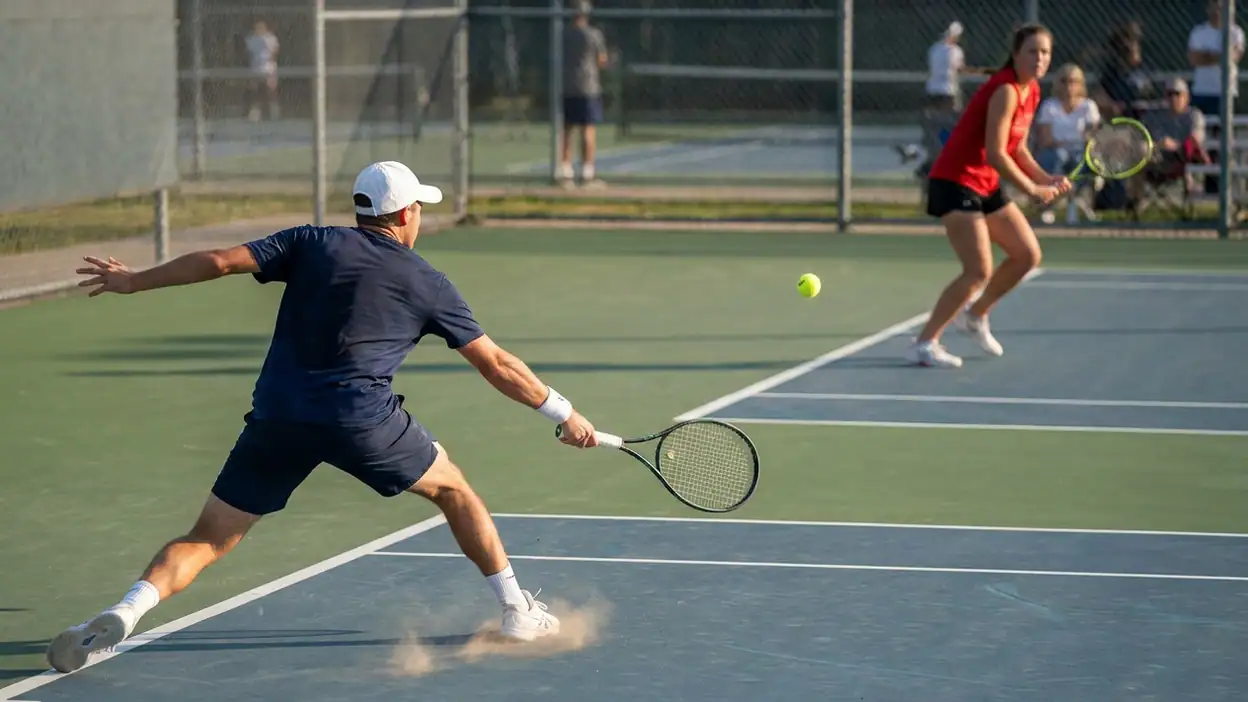
A tennis match in Tennis Clash: Multiplayer Game can be over before the kettle boils, yet the result has a way of hanging around. One clean rally feels satisfying; one late mistake feels personal. That tension is the game’s real community hook. The court is compact, the controls are approachable, and the multiplayer format makes every point feel like a small public test of nerve. But the wider experience is not created by the match engine alone. It depends on the habits players form around competition, progression, rematches, clubs, chat, and the endless urge to prove that the last loss was an accident.
After spending time with the game, I came away convinced that Tennis Clash is best understood as a social competition machine rather than a simple mobile tennis title. Its network value appears in repeated challenges and shared status, not in deep conversation. Players do not need to build elaborate communities to participate. They need only show up, play a few rallies, collect rewards, compare progress, and decide whether to risk another match. That low commitment makes entry easy, but it also creates a fragile ecosystem: the same systems that keep the queue active can make the experience feel transactional, pressured, or repetitive.
The community lives between the points
The most interesting thing about Tennis Clash is how little social infrastructure is required for a match to feel social. You are usually facing another player, or at least an opponent presented through the game’s competitive structure, and that knowledge changes the rhythm immediately. A mistake is no longer just a missed input. It is a lost point that someone else can exploit. A comeback is not merely progress through a level. It is a small reversal witnessed by an opponent who was expecting the match to end.
This is a quiet form of community. There may be no long conversation, no shared strategy board, and no need to know the person on the other side. The connection happens through timing, ranking, emotes, match history, and the mutual understanding that both players are chasing the same narrow prize: the next win. That is enough to create a recognizable multiplayer ritual. You open the game, enter the queue, read the opponent’s style, and spend a few minutes trying to turn a handful of swipes into control.
The result is closer to a neighborhood court than a traditional online forum. Players recognize patterns rather than personalities. They remember aggressive servers, patient returners, and opponents who seem to appear whenever their resources are low. The community is therefore visible through behavior. It is made of habits, not speeches.
A participation model built on short pressure
Tennis Clash asks for a small initial commitment. The basic interaction is easy to grasp: position the shot, control its direction and force, and respond to the opponent’s movement. That simplicity is essential to the game’s social reach. A newcomer does not need to learn a full control scheme before joining the conversation through play. The first match communicates the rules more effectively than a long tutorial could.
From there, participation becomes layered. A player can remain a casual visitor, playing a few matches during a break. Another player can chase progression, improve equipment, enter more demanding tours, and take the competitive ladder seriously. A more committed user may join a club, follow event cycles, compare results, and treat daily play as part of a routine. The game accommodates these levels without requiring everyone to share the same ambitions.
That flexibility is one of its strongest community features. There is no single correct way to belong. You can participate through skill, persistence, collection, status, or simple repetition. The danger is that progression systems can blur the line between meaningful improvement and account maintenance. When rewards, upgrades, and timers become more prominent, the social experience risks shrinking into a series of chores performed to remain eligible for the next competition.
The best moments come when progression supports the match instead of replacing it. A stronger racket or more capable character matters because it changes how you approach a rally, not merely because it raises a number. The community has something to discuss when players can point to a tactical difference. It has less to discuss when victory feels determined by invisible arithmetic before the first serve.
How newcomers enter the circle
New players enter Tennis Clash through a forgiving front door. The court is readable, matches are brief, and the first victories arrive quickly enough to create confidence. That matters because competitive games often lose newcomers before they understand why they should care. Here, the reason is immediate: the match begins, the opponent moves, and the player can see the consequences of each decision.
The onboarding also has a useful social effect. It teaches the newcomer the same vocabulary used by more experienced players: serve placement, shot timing, movement, stamina, equipment, and tour progression. Even without joining a formal group, a beginner starts to understand what other players are optimizing. This shared vocabulary is the foundation of any durable competitive community.
Still, the apparent simplicity can be misleading. Early matches teach the basic gesture, but they do not necessarily explain the deeper economy of improvement. Newcomers can understand how to hit the ball while remaining uncertain about which upgrades matter, how matchmaking behaves, or why a previously comfortable opponent suddenly feels impossible. That gap creates a familiar social divide. Experienced players know which systems deserve attention; beginners often learn through losses, experimentation, or external advice.
There is also a psychological threshold after the first few sessions. The opening victories feel like an invitation, but later competition demands patience and a willingness to accept uneven results. A newcomer who expects a pure reflex game may be surprised by the importance of progression and loadout choices. A newcomer who expects a long-form sports simulation may find the controls too streamlined. The ecosystem grows most successfully when players understand what kind of competition they have actually joined.
The rituals that keep the queue alive
Tennis Clash is held together by repetition. The daily check-in, the short match, the reward claim, the upgrade decision, and the return to the queue form a compact ritual that can fit into ordinary life. It is not a game that demands a dedicated evening. It asks for a few minutes, then quietly suggests that a few more minutes would be sensible.
That rhythm creates several recurring player behaviors. Some users chase a particular tour or event. Others play until they recover a lost resource or complete a reward track. Many will stop after a frustrating defeat, then reopen the game later because the unfinished feeling remains. The emotional loop is especially strong because matches are short enough to make one more attempt seem harmless.
Community rituals also appear in the way players interpret streaks and setbacks. A winning run becomes a personal story. A losing run becomes a problem to diagnose. Players adjust their equipment, change their approach, blame matchmaking, or decide that they were simply distracted. These explanations may not always be accurate, but they give the game social meaning. People share not only victories, but theories about why victories happen.
Clubs and group competitions add a broader rhythm. They turn individual matches into contributions toward a collective result, giving players a reason to care about activity beyond their own record. The exact depth of that cooperation can vary, but the principle is valuable: a player who might skip one more solo match may continue if that match helps a group reach a target. This is a modest form of teamwork, yet it can be enough to turn a private habit into a shared obligation.
What players contribute
Player contribution in Tennis Clash is mostly practical rather than creative. Users supply the activity that makes matchmaking meaningful. They create the variety of styles that prevents every match from feeling like a scripted drill. They also generate the informal knowledge that surrounds the game: which shots are reliable, which equipment combinations feel balanced, how to handle particular opponents, and when a risky serve is worth attempting.
That knowledge travels through videos, streams, social posts, fan groups, and private conversations, although the exact scale and quality of those spaces can change over time. It is safer to say that the game invites a creator layer than to assume every platform has an equally active community. The core product provides the match; players provide interpretation. A creator who explains positioning or breaks down a difficult rally is extending the game’s lesson beyond the built-in tutorial.
There is also a quieter contribution from ordinary users. Every active player helps maintain the feeling that the game is populated. Every repeated match supplies data, competition, and a sense of occasion for someone else. In a multiplayer sports game, participation itself is content. The opponent is part of the experience even when neither side says a word.
At its best, this contribution produces a useful cycle. Players compete, discover patterns, share advice, return with new ideas, and give the next opponent a more interesting challenge. At its weakest, the cycle becomes imitation. A dominant tactic spreads, matches become predictable, and newcomers are told to copy a proven setup before they understand the underlying trade-offs. Community knowledge can educate, but it can also narrow the game.
Where the social friction appears
Short competitive games are efficient at producing irritation. Tennis Clash is no exception. A close loss can feel fair because every point is visible, but it can also feel suspicious when the opponent’s equipment, connection, or apparent level does not match your expectations. The shorter the match, the more weight each mistake carries. There is less time to recover from an unlucky bounce, a mistimed shot, or a moment of lag.
That pressure shapes player behavior. Some users become more cautious, trying to protect a lead rather than play attractive tennis. Others respond to frustration with riskier shots and faster decisions. The game can therefore create a cycle in which a single defeat changes the next match before it begins. The player is no longer responding only to the opponent; they are responding to the memory of the previous result.
Progression and monetization can intensify this friction. Any competitive game with upgrades must persuade players that improvement is earned, while also making continued investment feel tempting. If the balance is not transparent, users may question whether they lost because of strategy, skill, equipment, or spending. That uncertainty is corrosive to community trust. Players can tolerate losing. They are less tolerant of feeling that the rules of the contest are hidden.
Compared with a game such as Hero Wars: Alliance, where group coordination and long-term roster building are more visibly central, Tennis Clash keeps social contact closer to the match itself. That makes the interaction cleaner, but it also leaves less room for friendships to soften a bad result. In a club-based strategy game, a disappointing session can still produce planning or conversation. In Tennis Clash, the disappointment often lands directly on the individual.
Moderation, safety, and what remains unclear
The game’s limited communication surface reduces some risks. Players are not required to publish personal information, and quick competitive interactions are less exposed than an open social feed. That is a sensible design choice for a sports title aimed at a broad mobile audience.
Even so, a community report should be careful about what it cannot verify from ordinary play. The quality of moderation, the handling of reports, the treatment of abusive messages, and the consistency of enforcement are not fully visible to a player simply moving through matches. If clubs, chats, or external community spaces are involved, their safety also depends on tools and policies that may not be obvious inside the game. It would be overconfident to describe the wider ecosystem as uniformly safe or uniformly unsafe without current, direct evidence.
The practical lesson is that low-contact design is not the same as complete protection. Emotes, usernames, rankings, club membership, and external discussion can still create pressure or unwanted attention. Parents and younger players may also encounter purchase prompts and competitive systems that reward frequent return. The key question is not only whether players can communicate, but whether they understand the boundaries of the systems asking for their time, money, and attention.
For a community to mature, moderation needs to be more than the removal of obvious abuse. It should also support clear reporting, understandable rules, reasonable purchase controls, and a way for players to distinguish ordinary competition from behavior that crosses a line. The available experience does not make every part of that structure visible, so this remains an area where caution is appropriate.
Where network value becomes real
The network value of Tennis Clash appears most clearly in matchmaking. A tennis game with convincing controls can still feel empty if every opponent is predictable. Human competition supplies the uncertainty that makes a familiar court feel fresh. The same serve can succeed against one player and fail against another because opponents read movement differently, take different risks, or respond to pressure in their own way.
Clubs create a second layer of value by giving activity a shared destination. Their importance is not necessarily conversational depth. It is the feeling that a match can count for more than your private record. A player who contributes to a group event is participating in a small economy of trust: others expect activity, and the player receives identity and belonging in return.
Rankings and visible progress add a third layer. They turn improvement into something that can be compared, even if the comparison is imperfect. This is where the game’s competitive culture becomes most legible. Players want to know whether they are merely winning or actually advancing. They want evidence that their time has produced status.
That network value is strongest when the systems reinforce one another. Matchmaking provides opponents, clubs provide context, rankings provide recognition, and shared advice provides direction. Remove any one of these and the game can still function, but the social loop becomes thinner. The title does not need a massive forum to remain alive; it needs enough active players to keep competition varied and enough shared structure to make repeated play feel meaningful.
Can the ecosystem last?
The answer depends on whether Tennis Clash can keep its short matches from becoming emotionally repetitive. The basic loop is durable because tennis naturally produces suspense through alternating advantage. A player can be behind and still believe the next point matters. That is a strong foundation for a mobile game.
Longevity, however, requires more than a reliable serve and a busy queue. Players need reasons to return that do not reduce every session to reward collection. Events, clubs, new competitive goals, and meaningful tactical variation can help. So can balance changes that prevent one dominant style from becoming the only sensible way to play. If updates merely add more progression pressure, the community may remain active while becoming less enthusiastic.
The ecosystem also needs room for different kinds of players. Competitive specialists should have goals worth chasing, but casual users should not feel like disposable opponents. Newcomers need a path into the community that does not immediately expose them to veterans with overwhelming advantages. Groups need enough structure to encourage cooperation without turning participation into an unpaid obligation.
There is a useful contrast with House Designer: Fix & Flip, where the social value is more indirect and often comes from sharing taste, progress, or inspiration. Tennis Clash depends on live or live-feeling opposition much more directly. That gives it a stronger immediate network effect, but also makes it vulnerable to population decline and balance problems. If the player pool thins or the matches feel predetermined, the central promise weakens quickly.
For now, the game’s strongest survival mechanism is its accessibility. A player can return after a break and understand the next match within seconds. That low reentry cost matters. The game does not demand that you remember a complicated story or rebuild a large settlement. It asks whether you can read the opponent and place the ball. As long as that question remains interesting, the community has a reason to keep gathering.
The community verdict
Tennis Clash succeeds as a community product because it turns competition into a repeatable social signal. You do not need a microphone, a long session, or a large friend list to feel another player’s presence. The opponent is there in the timing of the rally, the pressure of the score, and the lingering need to understand what just happened.
Its limits are equally clear. The social layer is light, and that can make losses feel isolated. Progression can complicate the meaning of skill. Communication and moderation structures are not fully visible from the match itself, so claims about the wider ecosystem should remain measured. The game’s community is less a conversation space than a network of repeated challenges, shared routines, and informal advice.
That is not a weakness by definition. In fact, it is why the game is easy to enter. Tennis Clash does not ask players to become community managers or dedicated sports fans. It asks them to play one more point. If the match feels fair, that invitation is remarkably effective. If the result feels governed by hidden systems, the same compact design leaves little else to hold the relationship together.
My final view is that Tennis Clash has a durable but narrow ecosystem. Its community value comes from the quality and variety of competition, supported by clubs, rankings, events, and player-made knowledge. It is at its best when those layers make the next match more interesting rather than more demanding. For players who enjoy quick rivalry and the ritual of gradual improvement, the network is strong enough to keep the court busy. For anyone looking for deep cooperation or a rich social world outside the match, the game may feel more like a crowded tournament hall than a lasting club.


