Zedge’s Wallpaper Community Thrives on Variety, but Trust Remains a Challenge
 Analysis by Appyee
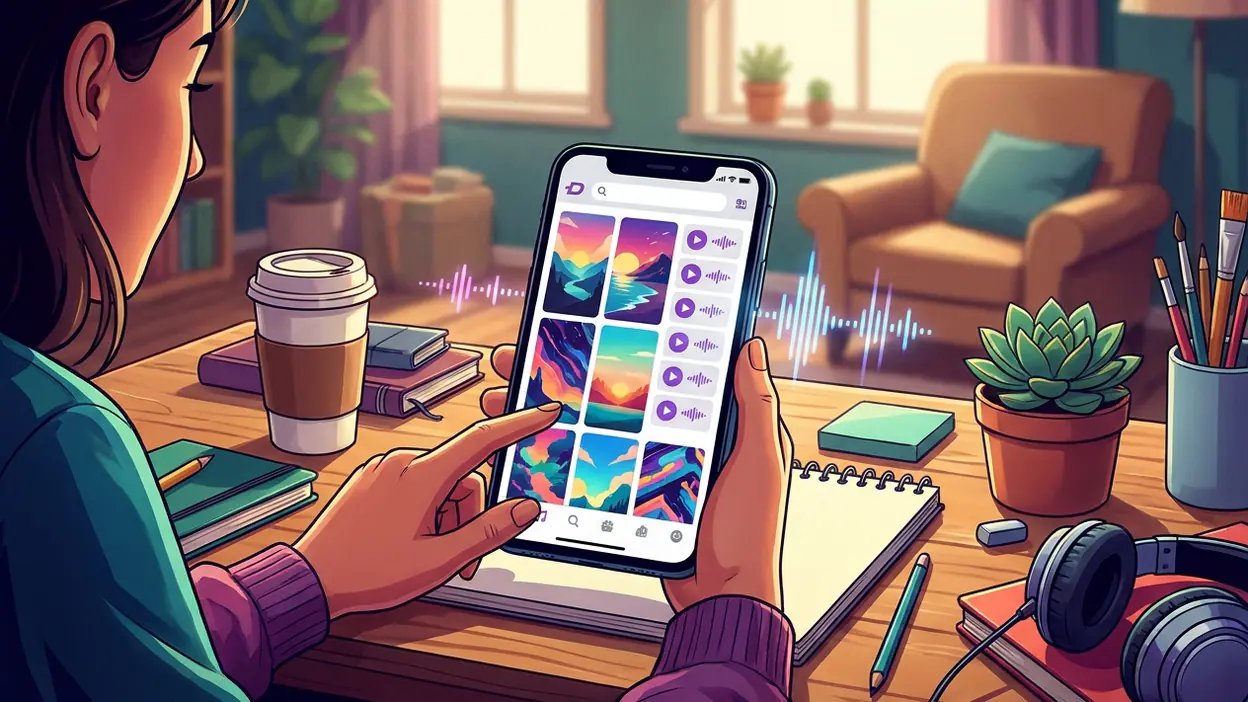
A wallpaper app can be useful without being social, but Zedge™ Wallpapers & Ringtones sits in an interesting middle ground: it is a practical customization tool built around a huge stream of other people’s taste. You arrive to change a screen or sound, then spend time browsing the choices that users and contributors have put in front of you. That makes Zedge’s community less like a club with conversations and more like a constantly refreshed catalog. Its strength is the volume and variety that shared participation can create; its weakness is that the people behind that variety can be hard to see.
A community made of choices
Zedge’s ecosystem is easiest to understand through its artifacts. Wallpapers, ringtones, notification sounds and related personalization items are the visible output of a network of contributors and browsers. The app does not need every user to post comments or follow creators for that network to matter. A person who downloads a wallpaper participates in a smaller way: their selection helps determine what feels discoverable and worth keeping in circulation.
This is a different social contract from a comic platform such as WEBTOON, where readers follow serialized work and can gather around creators, or a game such as Ludo King, where the shared activity is the match itself. Zedge’s users often meet through a common aesthetic preference rather than a conversation or a session. One person wants a dark, minimal home screen; another wants a vivid landscape or a familiar character. Their tastes overlap in the catalog, even if they never know one another.
That distinction matters. Zedge is not best judged by how much community chatter it generates. Its network value shows up when one person’s upload becomes another person’s daily lock screen, or when a sound travels from a contributor’s collection into thousands of phones. The app turns individual preferences into reusable materials for other people’s devices.
Participation without a big social commitment
The participation model is intentionally lightweight. Most people can browse, preview, save or apply material without announcing themselves, joining a group or maintaining a public profile. That lowers the cost of entry. It also means participation can be brief and private: a user may open Zedge for a single ringtone, make a choice, and leave without feeling they have abandoned a social obligation.
For contributors, the exchange is more involved. Creating or supplying assets gives the catalog new material, while publishing makes that work available to people looking for a particular look or sound. The exact contributor tools, discovery rules and reward arrangements can vary over time and by account or region, so it would be a mistake to assume every upload receives equal exposure or that every creator is compensated in the same way. What is clear from the product’s format is that the community depends on people supplying things other users want to personalize with.
This model rewards usefulness and immediate appeal more than sustained dialogue. A striking image or a ringtone with the right mood can travel on its own merits. The trade-off is that contributors may receive less visible recognition than creators on platforms built around subscriptions, comments or fan communities. Zedge’s ecosystem is rich in outputs, but the relationship between maker and audience is not always the main event.
How newcomers find their footing
Newcomers do not need a guide to understand the basic ritual: search or browse, preview a candidate, then decide whether it belongs on the phone. That simple loop is one of Zedge’s strongest community features because it makes other people’s contributions immediately legible. A user can judge a wallpaper against their own screen and taste, rather than needing to understand a creator’s backstory or a complicated community norm.
Categories and recommendations can help turn a broad catalog into a manageable starting point. Still, first-time users face the familiar problem of abundance. A search for a broad mood or subject may produce a long list of near-neighbors, and the app’s usefulness depends on how well browsing tools distinguish an excellent fit from a merely relevant one. The newcomer’s task is not just finding something good; it is learning what kind of search language and categories lead to good results.
There is also a practical learning curve in moving from discovery to use. A wallpaper must suit a particular screen and remain readable behind icons; a ringtone has to work as an alert rather than simply sound attractive in a preview. Zedge makes customization approachable, but good choices still require judgment. The best community contribution is not automatically the one with the loudest colors or the most dramatic sound.
The small rituals that keep the catalog alive
Zedge’s recurring rituals are personal rather than ceremonial. People refresh a wallpaper when a season changes, look for a new sound after a familiar alert has become irritating, or browse during a phone setup and special occasions. The cycle is light but repeatable: notice that a device feels stale, search for a new expression of taste, test it in context, and keep or replace it.
That rhythm gives the app a form of stickiness without demanding daily attendance. A user might not open it every morning, yet return whenever a device needs to feel different. The phone is the display case and the practical reason to come back. This is a quieter loop than PUBG MOBILE’s competition or Avatar World’s ongoing creative play, but it fits a utility whose best result is often a tiny change that makes a familiar device feel personal again.
Sharing extends those rituals, though the exact paths and visibility can differ across app versions and platforms. A user may pass an item to someone who wants the same look, while a contributor’s work can be encountered by strangers browsing related material. The app’s core social behavior is therefore less “talk about what you made” and more “make something available, find something useful, and carry it into everyday life.”
Contribution, friction and the trust gap
Any open-ended media catalog has a tension between scale and confidence. More contributors can mean more niches served, more visual styles and a better chance of finding an unexpected favorite. It can also mean uneven quality, repetitive material and uncertainty about the source or rights behind an item. Those are risks to assess carefully rather than claims that every listing has a problem.
Attribution is part of the same tension. When a wallpaper is easy to apply and easy to forget, the work behind it can disappear from view. Users may care chiefly about the finished image, while creators need credit, control and a fair route to an audience. The healthier the contribution system makes those relationships, the more likely skilled makers are to keep adding distinctive work instead of treating the catalog as a one-way upload bin.
Social friction here is not usually an argument in a comment thread. It is the quieter irritation of searching through duplicates, encountering material that does not match its label, or being unsure whether an item is safe and properly represented. A recommendation feed can make discovery pleasant, but it can also narrow attention toward what is already popular. Small, unusual contributions may struggle to compete with content that has already gathered momentum.
Moderation and safety deserve particular caution. Zedge’s catalog includes user-facing media, and any large catalog needs ways to handle inappropriate, misleading or rights-infringing submissions. From ordinary browsing alone, however, a reviewer cannot verify how consistently reports are assessed, how quickly disputed work is removed, or what standards govern every category and region. Users should use platform reporting tools when available and avoid treating a listing’s presence as proof of ownership or endorsement. Those limits do not erase the app’s utility, but they do put responsibility on the service to make trust signals and reporting routes clear.
Where the network creates real value
The network effect appears in the long tail. A small collection made by one person might never be worth building as a standalone product, but a large shared catalog can make uncommon moods and interests easier to find. For users, that means more chances to shape a device beyond the default choices. For contributors, it means a possible audience outside their own circle. The value is not guaranteed for every upload; it comes from the scale of the combined collection.
There is a practical limit, too: Zedge’s community is most valuable when the app helps people reach a good choice quickly. More items are not automatically better if search and curation cannot keep pace. The platform has to balance discovery with relevance, and variety with quality. Otherwise, community scale turns into browsing work that users must do themselves.
That is where Zedge differs from a creator-first network. It can make a contributor’s work useful to a broad audience, but the connection may remain mostly transactional. A user downloads, applies and moves on. Creators who want direct feedback, a loyal following or a visible identity may find that a dedicated art or social platform serves them better. Zedge is the distribution shelf, not necessarily the whole relationship.
Can this ecosystem last?
The model can endure because personalization repeats. Phones stay with people, tastes shift, and familiar alerts eventually wear thin. A catalog that keeps adding relevant material has a reason to be revisited. Yet longevity depends on more than sheer upload volume. The service needs useful discovery, clear standards and enough recognition or practical incentive to keep contributors investing effort.
It also has to respect the difference between a popular item and a trustworthy one. Ranking by engagement alone can reward familiarity and repetition, while careful moderation and transparent attribution take work that users may not notice until something goes wrong. Those are general pressures for a community-fed catalog, not proof of a specific failure in Zedge. They are the questions that determine whether its network remains a resource or becomes clutter.
My verdict is that Zedge’s community is real, but deliberately quiet. It does not ask users to become fans, friends or regular performers; it asks them to contribute to a shared pool of sounds and images, then gives other people a reason to return. The ecosystem’s best feature is how easily someone else’s taste becomes part of your daily phone experience. Its weakest point is the distance between that convenience and the people, rights and moderation work behind each asset. For anyone who wants a broader choice of wallpapers and ringtones, Zedge remains compelling. For creators and users who need strong social connection or clearly visible accountability, the catalog alone is not enough.
Zedge™ Wallpapers & Ringtones succeeds when it treats personalization as a shared supply of small, expressive choices. The community does not need to be loud to matter, but it does need thoughtful curation and trust. Zedge gives users a reason to browse; whether it gives contributors enough reason to keep building is the question that will shape its future.


